
Sourcing casting alloys for large components in Melbourne? TP Castings delivers certified, high-mass aluminium and bronze foundry pours for industry.
Scaling up a non-ferrous melt to hundreds of kilograms introduces severe thermodynamic and structural risks that standard high-volume die-casting simply cannot handle. When engineering heavy-duty industrial tooling or complex marine infrastructure, selecting the appropriate casting alloys for large components is critical to preventing costly structural defects. For Australian manufacturing sectors, mastering this specific production scale requires an intentional combination of metallurgical expertise, rigid mould systems, and a secure domestic supply chain.
How Do You Select the Best Casting Alloys for Large Components?
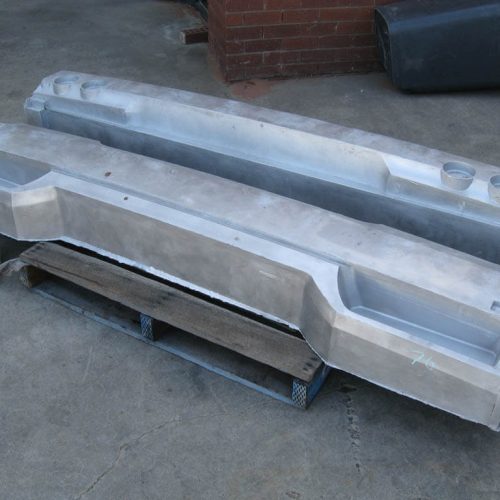
Selecting the ideal raw material for high-mass pours depends heavily on how the molten metal behaves within a large cavity. Large-scale projects require specific casting alloys for large components that offer exceptional fluidity to ensure the liquid fills deep geometries completely before freezing begins. For heavy aluminium castings up to 800 kilograms, such as those used to manufacture complex rotational moulding tools, aluminium alloy grade AA356 is the preferred industrial choice due to its high silicon content.
Conversely, when heavy-duty wear resistance is paramount for the mining or maritime sectors, copper alloys like aluminium bronze are selected for pours reaching up to 200 kilograms. These robust metals deliver incredible tensile strength and excellent corrosion resistance across thick wall cross-sections.
Sourcing High-Mass Non-Ferrous Metals: Navigating Australian Standards
Procuring non-ferrous raw materials requires certified master ingots with complete traceability to prevent internal impurities from weakening large structural components. In the domestic market, complying with frameworks like AS 1874-2000 for aluminium and the updated AS 1565:2023 for copper ensures structural integrity and predictable post-cast machining. Sourcing these compliant metals from a local foundry completely avoids volatile global shipping timelines while guaranteeing full regulatory compliance.
Overcoming Foundry Risks: Thermal Control and Porosity
Managing the physical challenges of a unified heavy pour requires precise thermodynamic control throughout the entire cooling cycle. Because a large volume of liquid non-ferrous metal retains heat for an extended period, it is particularly susceptible to solidification shrinkage and hydrogen porosity. Professional foundries implement strict operational protocols to mitigate these vulnerabilities and ensure structural integrity:
- Rotary Degassing: Molten aluminium absorbs hydrogen gas rapidly during prolonged holding times, which can lead to micro-voids that ruin expensive machining work later. Purging the melt with inert gases before pouring eliminates this trapped gas.
- Air-Set Sand Systems: Traditional green sand lacks the structural integrity to withstand the intense hydrostatic pressure of a heavy pour. Utilising rigid, chemically bonded air-set sand moulding systems is essential for maintaining strict dimensional tolerances.
- Engineered Feeding Networks: Specialised riser and gating designs supply a continuous stream of molten metal to the main component as it cools, preventing internal shrinkage cavities from forming.
High-Mass Solutions and Casting Alloys for Large Components at TP Castings
Successfully executing high-mass non-ferrous pours demands a deep understanding of metallurgy, strict compliance with Australian Standards, and the selection of appropriate casting alloys for large components. Partnering with a dedicated domestic foundry eliminates the risks of internal porosity and structural warping while bypassing global supply chain delays entirely. At TP Castings, our specialised sand-casting infrastructure reliably delivers high-quality aluminium pours up to 800 kilograms and bronze pours up to 200 kilograms to ensure flawless industrial performance.
Contact us to begin your next heavy industrial project with a reliable manufacturing partner right here in Australia.
Related Blog Articles:
Aluminium Heat Treatment for Castings: Achieving T6 Strength and Dimensional Stability
Why Cheap Overseas Casting Manufacturers Cost You More