
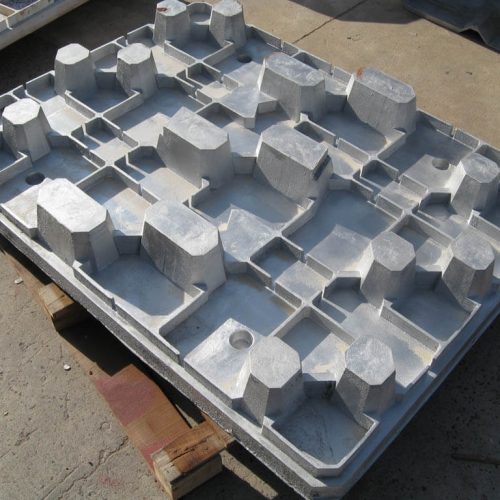
TP Castings supplies precision vacuum moulding dies Australia-wide for consistent parts, durable tooling and reduced production waste.
Precision vacuum moulding dies provide the forming surface used to shape heated thermoplastic sheet into repeatable components. Tool geometry, surface condition and compatibility with the forming process influence part definition, release and the amount of avoidable rework generated during production.
What Makes Precision Vacuum Moulding Dies Reliable?
A reliable tool must be manufactured around the approved part geometry, forming material, production equipment and expected operating conditions. Precision is not limited to the tool’s overall dimensions because small features can affect how the sheet stretches, contacts the surface and releases after cooling.
Important considerations include:
- Accurate geometry: The tool should reproduce the approved drawing or model, including the dimensions and features identified as critical.
- Suitable draft: Draft assists part removal and reduces the risk of sticking or damage. The required angle depends on the geometry, material and whether the mould is male or female.
- Practical radii: Smooth corners and transitions can support material distribution and reduce severe thinning around tight features.
- Effective vacuum paths: Hole and passage locations should allow trapped air to be removed so the heated sheet can contact the intended tool surface.
- Controlled surface condition: Marks or irregularities on the tooling may be reproduced on the formed component, depending on the process and finish requirements.
- Appropriate tooling material: Cast aluminium can be used for thermoforming moulds where production requirements call for durable, machinable tooling with useful heat-transfer characteristics.
The National Training Register guidance for trialling complex moulds includes cast and machined aluminium moulds among the tooling used with thermoforming and vacuum-forming systems. It also identifies setup, cycle time, heating, cooling and product-quality measures as relevant operating requirements, confirming that tooling is only one part of process control.
How Does Accurate Tooling Support Part Consistency?
Accurate tooling creates a stable reference surface for repeated forming cycles. When the mould remains within the required condition and the machine settings are controlled, it can support more predictable dimensions, surface definition and trim locations.
The production benefits may include:
- Repeatable shape: Controlled tool geometry helps maintain the intended component form across a batch.
- Clearer feature definition: Suitable radii, vacuum paths and surface preparation help the sheet follow the required contours.
- Improved release: Appropriate draft and finish can reduce damage as cooled parts are removed.
- More predictable trimming: Consistent formed geometry gives operators a more stable basis for trimming and inspection.
- Better fault investigation: A documented tooling baseline helps separate mould-related issues from material, heat, cooling or machine-setup problems.
Our article on vacuum moulding dies for intricate surface contours explains why sealing, alignment, finish and maintainability also matter when detailed features must remain consistent.
How Can Better Tooling Reduce Production Waste?
Poorly specified, damaged or worn tooling can cause forming defects, dimensional issues and part-release damage, increasing material waste, rework and production time. While vacuum-formed parts still require trimming and depend on correct process settings, well-made tooling can help reduce avoidable rejects. Precision vacuum moulding dies are most effective when correctly specified, trialled, maintained and used within a controlled process.
Request Custom Vacuum Moulding Tooling from TP Castings
TP Castings manufactures non-ferrous castings for vacuum moulding dies and supports projects through patternmaking, casting, precision machining, finishing and inspection. Our casting services accommodate one-off requirements and production work, with aluminium casting capacity of up to 800 kilograms.
Send us the approved model or drawings, required dimensions, tooling material, surface-finish expectations, equipment details and anticipated production requirements. Contact us to request a project-specific assessment and quote for custom precision vacuum moulding dies.