
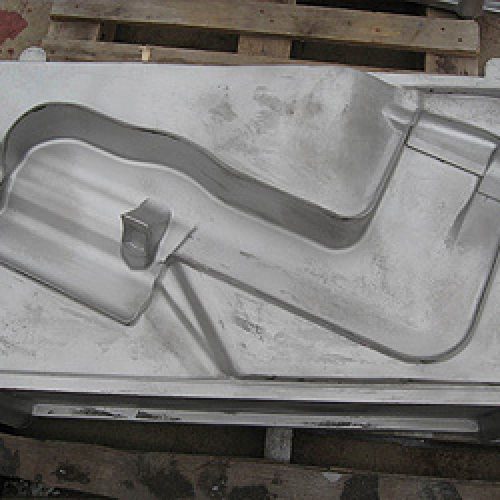
TP Castings supplies custom aluminium castings Australia-wide for one-off parts, prototypes, replacement parts and planned production runs for industry.
Custom aluminium castings provide a practical way to manufacture unique components, obsolete replacement parts, prototypes and repeat-production items. However, the right production approach depends on more than the number of castings required for the first order. Component geometry, pattern construction, alloy, machining, finishing and future demand can all affect the process and total cost.
When Do Custom Aluminium Castings Suit a One-Off Order?
A one-off order may suit an obsolete replacement part, a prototype that needs physical assessment or a specialised component with no expected repeat demand. It may also be appropriate for a unique mould, plaque or general engineering item made for a specific application.
Producing one casting still requires the foundry to assess the design or sample, select a suitable alloy and plan the pattern, cores and machining requirements. Although the development cost is allocated to one component, a one-off order allows the customer to confirm the design before committing to a larger production run.
When Does a Production Run Become the Better Option?
A production run may be more economical when several identical parts are required or ongoing demand is expected. Once the design and casting method are established, the pattern can be reused to produce multiple moulds and support greater consistency across the production run.
TP Castings works with wood, plastic, fibreglass and metal patterns, with the pattern material selected according to the expected volume and project requirements. The Australian Aluminium Council notes that sand casting is typically used for small production numbers but can also support high-volume manufacturing, while larger orders may spread pattern and setup costs across more units.
What Should You Confirm Before Requesting a Casting Quote?
An accurate quote requires more than a requested quantity. Providing clear technical and commercial information helps the foundry assess the casting method, pattern requirements and finishing work.
- Design information: Supply a dimensioned drawing, CAD file or physical sample showing the required shape and dimensions.
- Order volume: State the initial quantity and any expected repeat demand so the pattern can be planned accordingly.
- Service conditions: Explain the loads, temperatures, wear, moisture or corrosive substances the component may encounter.
- Material requirements: Provide the nominated alloy or required properties, such as strength, corrosion resistance or machinability.
- Machining and tolerances: Identify critical dimensions, holes, threads and surfaces that require further machining.
- Finishing requirements: Confirm whether the casting requires heat treatment, blasting, polishing, powder coating or another finish.
- Inspection requirements: Specify any dimensional checks, testing, documentation or acceptance criteria required before delivery.
Request Custom Aluminium Castings from TP Castings
TP Castings produces custom aluminium castings for one-off applications, small batches and repeat-production requirements from its Dandenong facility. Its capabilities include aluminium castings up to 800 kg, pattern making, core making, machining, heat treatment and finishing. Providing complete project information allows the foundry to recommend an appropriate production approach for the component and expected quantity.
Contact us to submit your drawing, sample and order requirements for an assessment.