Custom blow moulding dies require accurate design inputs, suitable casting specifications and planned maintenance to support dependable production.
Tool life is not determined by casting alone. Product geometry, alloy selection, temperature control, machining, surface condition and operating practices all influence how reliably a die performs.
What Are Custom Blow Moulding Dies?
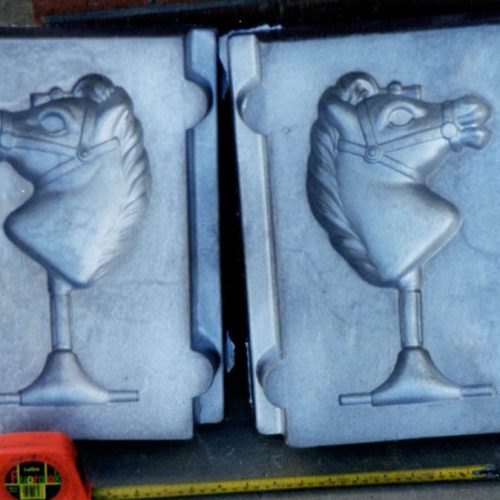
Custom blow moulding dies are tooling components shaped for the production of a specified hollow plastic product. The die must reproduce the intended geometry while accommodating process requirements such as parting lines, pinch-off areas, vents, neck details and temperature-control provisions.
TP Castings lists blow moulding dies among its non-ferrous casting services, alongside roto moulds, vacuum-forming moulds, pump components and general castings. The company’s published capability includes aluminium castings up to 800 kilograms, subject to project assessment.
Which Inputs Affect Die Performance?
A foundry cannot correct an incomplete tooling brief by choosing a stronger marketing claim. Manufacturers should provide accurate design and operating information before pattern and casting decisions are finalised.
Useful inputs include:
- finished component drawings or a validated three-dimensional model;
- expected production volume and machine details;
- material being processed and relevant temperature range;
- parting-line, pinch-off, venting and neck requirements;
- cooling layout and connection requirements;
- machining allowances and critical tolerances; and
- inspection, traceability and delivery expectations.
These details allow the foundry and toolmaker to discuss castability, machining access and areas that may require additional material or design refinement.
Does Casting Automatically Extend Tool Life?
No. A cast die is not automatically stronger, denser or more fatigue-resistant than every machined alternative. Performance depends on alloy, casting quality, design, heat treatment where applicable, machining and service conditions.
The CSIRO manufacturing research capability illustrates why manufacturing outcomes depend on process control and engineering—not simplistic claims about one production method.
TP Castings’ role should be presented accurately: producing cast components to an agreed specification and working from supplied patterns, models or project requirements. Final tooling performance also depends on downstream machining, assembly, commissioning and the moulding process.
How Can Operators Protect the Finished Die?
Once commissioned, dies should be operated within approved process settings and inspected at planned intervals. Keep cooling passages clear, monitor sealing and pinch-off surfaces, record recurring defects and address damage before it affects product quality.
When replacing an existing die, provide maintenance history and photographs of failed areas. That evidence may help the project team identify whether the problem relates to design, process settings, water quality, handling or wear.
Scope the Casting Before Production Is Interrupted
The strongest enquiry links the required casting to the machine, product and downstream finishing process. It avoids unsupported promises about cycle life and gives the supplier enough information to assess feasibility.
Quality requirements should be agreed before pouring. Depending on the component, that may include dimensional inspection of the casting, material identification, test certificates or defined acceptance criteria for visible and internal discontinuities. The purchaser should also clarify which party owns the pattern, model and machining data. These commercial details prevent ambiguity when replacement tooling or repeat castings are required.
Send drawings, models, target weight, quantity, alloy requirements and delivery timing through the TP Castings contact page. A clear technical brief supports a more useful discussion about custom blow moulding die castings and production planning.