
Request a cast aluminium plaque quote with artwork, dimensions, alloy, finish, mounting, quantity and installation environment defined.
TP Castings designs cast aluminium plaques in Australia for local councils and cemetery trusts, providing durable, durable public memorials.
What Should a Cast Plaque Specification Include?
Review our industrial casting gallery. This helps you compare the requested scope with what we actually offer.
Choosing the right material for regional and coastal Australian environments requires careful consideration of weight, heat tolerance, and material longevity. The selected aluminium alloy provide a practical alternative to bronze by addressing the unique environmental challenges faced by asset managers. This specific grade of metal can help public markers remain functional, safe, and visually appealing across all regional geographic locations.
- Corrosion Resistance: The properties of industrial aluminium protect the structure against severe coastal salinity and humidity without rusting.
For further context, read our aluminium casting process guide. It addresses a related decision without replacing a project-specific assessment.
Meeting Structural and Vandal-Proof Specs for Cast Aluminium Plaques
Local government frameworks require public property infrastructure to adhere to strict dimensional and safety standards. Most Australian municipalities demand standard dimensions like 200 mm x 100 mm for park benches or 380 mm x 215 mm for cemetery memorials to maintain uniformity. These precise measurements ensure every new piece fits seamlessly onto existing metropolitan assets without causing structural damage.
To combat property damage and opportunistic scrap-metal theft, modern foundries cast specialised rear-threaded studs directly onto the back face of the metal. This blind-fixing method ensures the plaque can be permanently set into stone or concrete plinths with heavy-duty epoxy. Because there are no exposed screw heads or rivets on the front profile, vandals cannot easily pry the metal installation away.
How Traditional Sand Casting Delivers Half-Century Longevity
You can also review our non-ferrous casting capabilities. We have distributed this link here because it supports the surrounding topic.
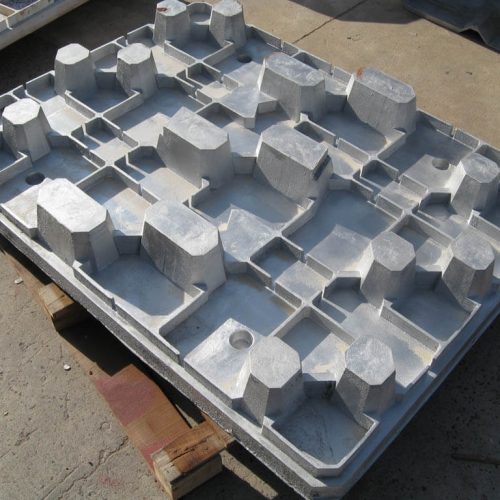
The exceptional lifespan of these public installations relies entirely on the precision of the traditional sand-casting manufacturing process. Molten alloy is poured at approximately 700 degrees Celsius into custom sand frames to form a single, monolithic block of metal. This method ensures that the raised lettering and decorative borders are a permanent, inseparable part of the physical metal structure.
Following the cooling phase, advanced post-processing treatments are applied to create a highly durable protective barrier. An industrial polymer powder coat is baked onto the surface, followed by mechanical linishing to reveal the bright silver lettering against a contrasting background. A final clear lacquer coat preserves this striking contrast, preventing dulling and ensuring the piece requires minimal ongoing maintenance.
High-Durability Commemorative Plaques by TP Castings
Investing in high-quality public commemorative assets requires an experienced manufacturing partner who understands municipal engineering standards. TP Castings delivers precision-engineered solutions tailored to the strict asset management policies of Australian local councils and cemetery trusts. By combining traditional foundational techniques with robust modern finishes, the company ensures every commemorative piece stands as an enduring tribute for generations to come.
For broader requirements outside our role, refer to Australian Aluminium Council resources. We will confirm only the product, service or advice that falls within our own scope.
Request a Plaque Casting Quote
Ready to turn the information above into a practical next step? request a plaque casting quote with the drawings, photographs, quantities, site conditions or operating requirements relevant to this service. Our team will review the details, identify anything missing and respond with a scope-specific next step rather than a generic promise.